Options… Options… Options…
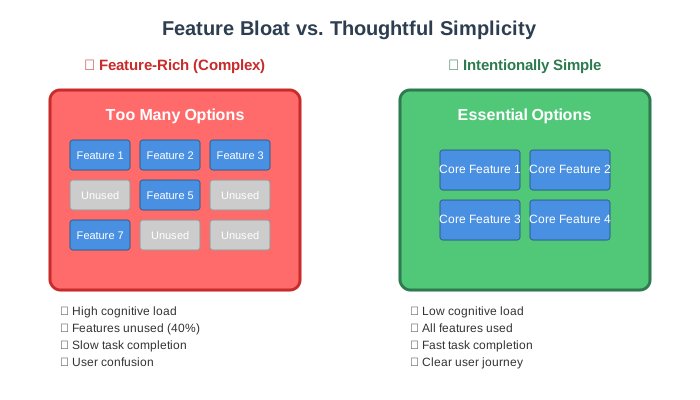
Early in my career, I worked on a system that offered users multiple ways to view the same data—grid views, list views, filters everywhere. On paper, it looked powerful.
In practice, analytics told a different story.
Users took longer to complete tasks. Features went unused. Complexity slowed them down.
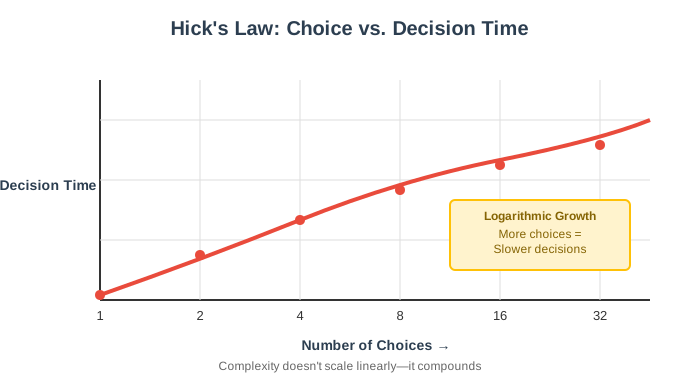
Hick’s Law explains why:
The time taken to make a decision increases logarithmically with the number of choices.
The Product Trap
Adding features is easy. Removing them is hard—especially in enterprise software where every feature has a sponsor.
But more options don’t always mean more value. Often, they increase cognitive load, reduce clarity, and delay decisions.
 The most effective products—and leaders—constrain thoughtfully.
Leadership Insight
Simplicity is not the absence of capability. It’s the result of intentional design, hard trade-offs, and respect for human limits.
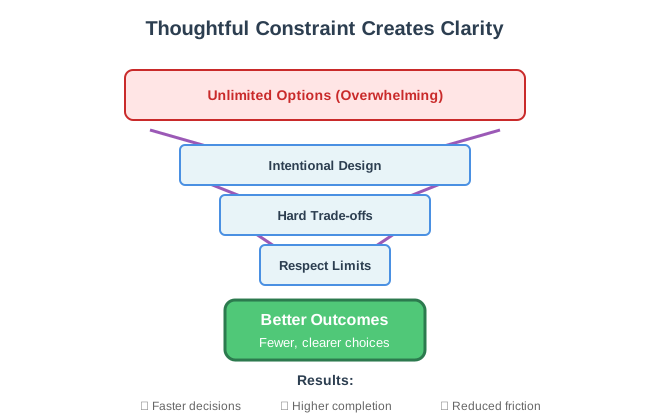 Sometimes, fewer options create better outcomes.
The Four Categories of Acceptance Criteria: Reducing Uncertainty Before Design Begins
Leading for Competence: The Discipline of Getting Things Done
Share this post