Managing Conflicts for Better Collaboration
Conflict is inevitable in any organization. The absence of conflict usually signals disengagement—not harmony.
Over the years, I’ve encountered, navigated, and resolved many conflicts, especially in product development environments where priorities, resources, and opinions collide. The turning point for me was understanding that most conflicts are not personal—they are systemic.
Professor Hans J. Thamhain classified conflicts in product development into seven sources:
- Schedules
- Priorities
- Resource constraints
- Technical opinions
- Administrative procedures
- Personality differences
- Cost and budget
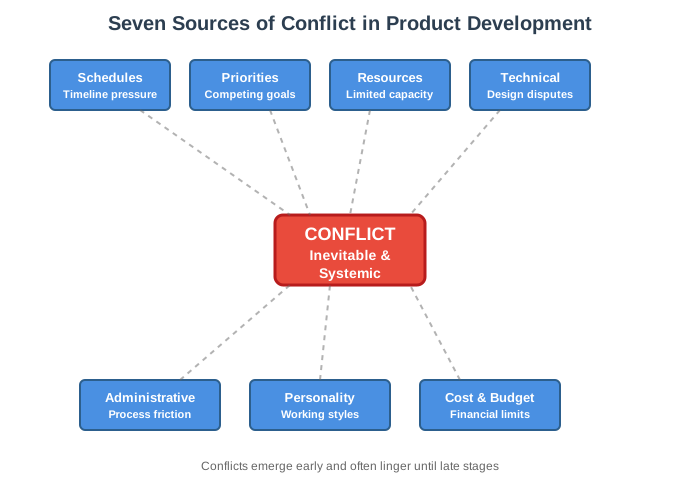 What’s critical is that these conflicts emerge early and often linger unresolved until late stages—where they become expensive and emotionally charged.
Approaches to Conflict Resolution
Escalation (“let’s go to management”) works occasionally, but it doesn’t scale. Mature organizations expect professionals to own, address, and resolve conflicts constructively.
The Blake–Mouton Managerial Grid outlines five approaches:
- Withdrawal
- Forcing
- Smoothing
- Compromising
- Confronting (problem-solving)
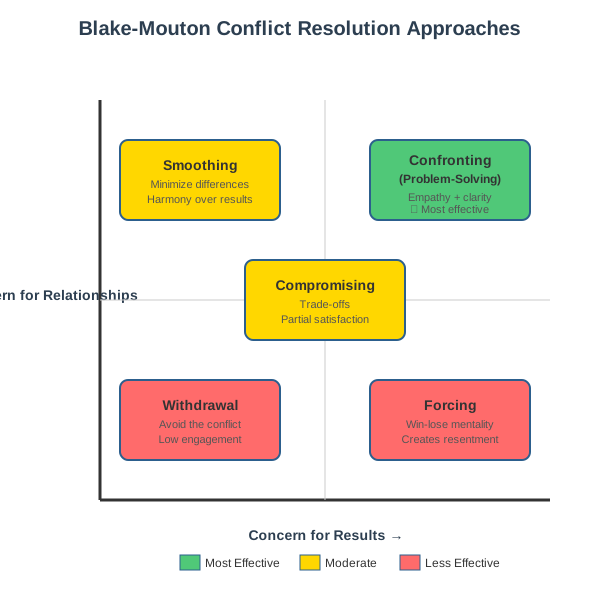
From experience, confrontation with empathy is the most effective. It clarifies intent, surfaces assumptions, and creates alignment. Forcing leaves resentment. Withdrawal delays the problem. Compromise works—but only when trade-offs are explicit.
Leadership Insight
Strong leaders don’t eliminate conflict—they channel it. When handled well, conflict sharpens decisions, strengthens collaboration, and improves outcomes.
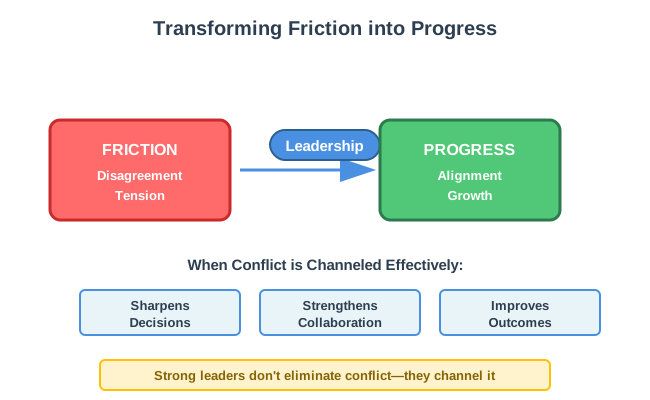 The real skill lies not in avoiding disagreement, but in transforming friction into progress.
Test Coverage vs Mutation Testing vs Property-Based Testing: Choosing the Right Signal
Measure… Measure… Measure…
Share this post