People as a System (PaaS) #2: Outcomes Over Control
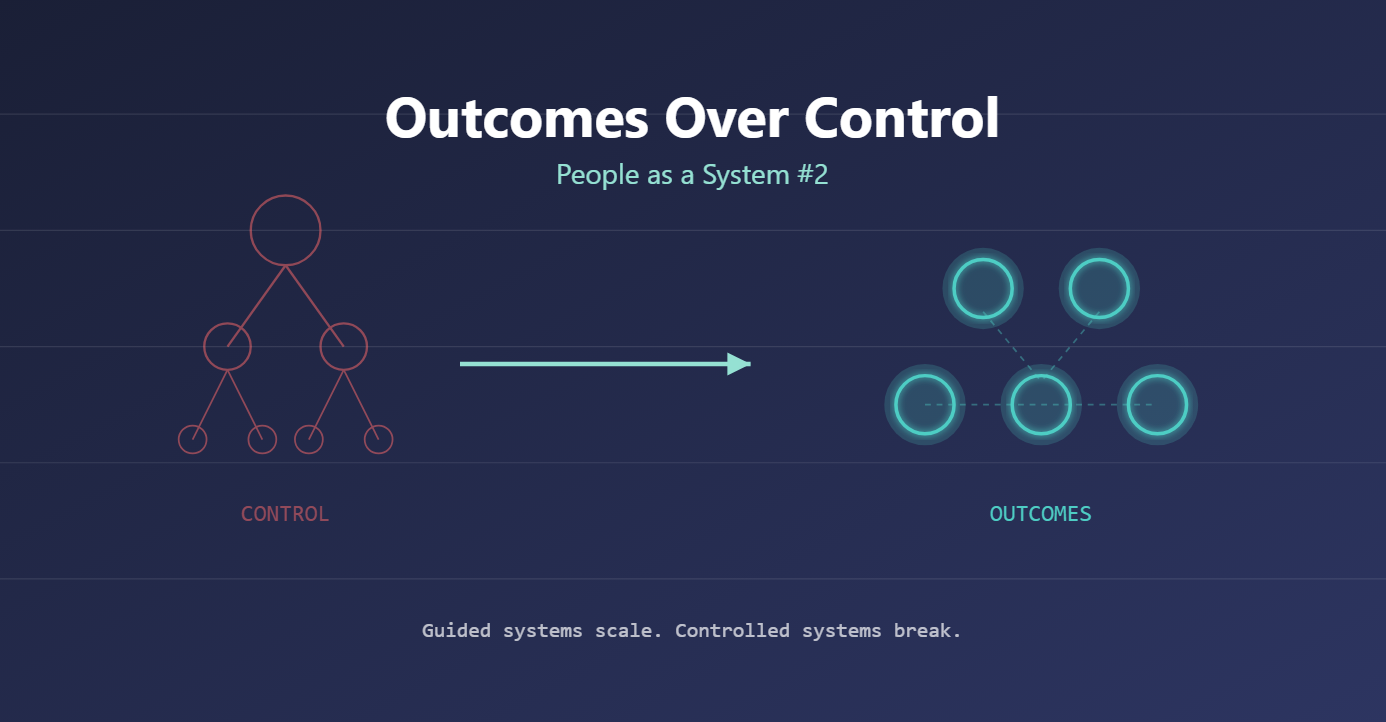
One of the earliest scaling problems every engineering organization encounters is not technical.
It’s behavioral.
As teams grow, leaders feel pressure to tighten control.
More checkpoints. More approvals. More instructions. More reporting.
The intent is good: reduce risk, increase predictability, protect outcomes.
The result is usually the opposite.
Delivery slows. Ownership erodes. Decision-making fragments.
And leaders end up supervising activity instead of guiding outcomes.
This is not a people problem.
It’s a system design problem.
Control feels safe — until scale exposes it
In software systems, control-heavy designs fail quickly at scale.
We don’t:
- hard-code behavior for every scenario
- dictate execution paths line by line
- manually intervene on every request
Instead, we define outcomes:
- contracts
- interfaces
- SLOs
- guardrails
- failure modes
We design systems that are guided, not directed.
Yet in leadership, we often reverse this discipline.
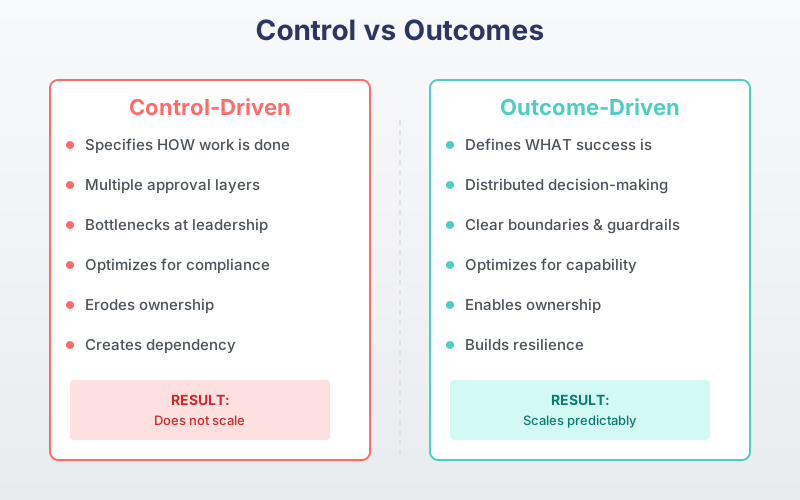
We specify how work must be done instead of what success looks like.
We optimize for compliance instead of capability.
We substitute supervision for clarity.
Control feels reassuring — especially under pressure — but it does not scale.
It creates dependency, not reliability.
Outcomes are a stronger primitive than instructions
In a People-as-a-System model, outcomes are the primary design primitive.
Clear outcomes:
- align decision-making without micromanagement
- enable autonomy without chaos
- distribute accountability instead of centralizing authority
When outcomes are well-defined:
- teams can self-correct
- individuals can choose their path
- leaders can step back without losing visibility
This is how resilient systems behave.
The role of leadership is not to orchestrate every move, but to architect conditions where the right moves emerge consistently.
The Control Fallacy
There is a persistent leadership anti-pattern I see repeatedly across organizations:
If I loosen control, things will fall apart.
This belief drives:
- excessive approvals
- duplicated reporting
- decision bottlenecks
- learned helplessness
Ironically, the more control imposed, the less capable the system becomes.
People stop thinking systemically.
They optimize for permission instead of progress.
They wait instead of acting.
Control does not eliminate risk.
It simply moves risk upward — until leadership becomes the bottleneck.
Bounded autonomy: how PaaS actually scales
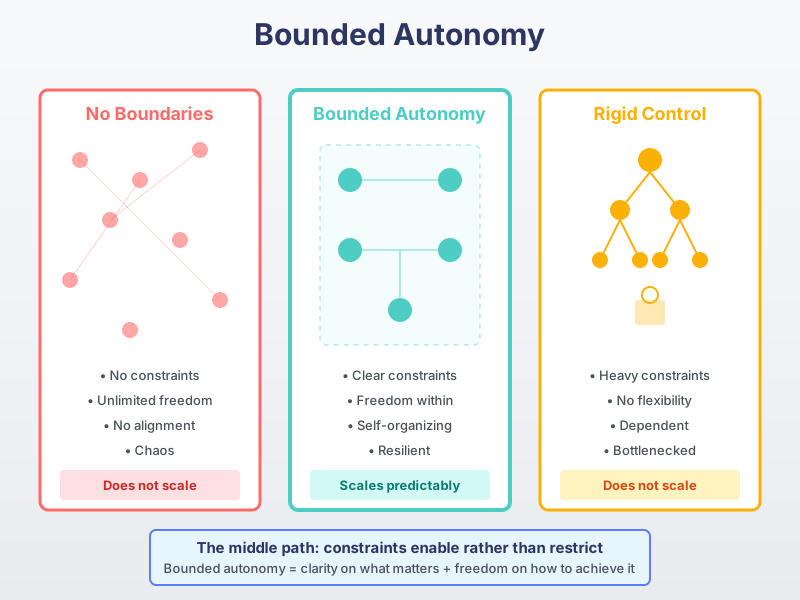
PaaS does not argue for unlimited freedom.
Unbounded autonomy is just chaos with better intentions.
What scales is bounded autonomy.
In engineering, we achieve this through:
- constraints
- contracts
- observability
- feedback loops
In people systems, it looks remarkably similar:
- clearly articulated outcomes
- non-negotiable constraints (safety, ethics, compliance)
- fast feedback on results, not activity
- trust reinforced through consistency
Autonomy is not granted as a reward.
It is designed into the system.
When done well, teams don’t need to be controlled — they are guided by intent.
 —
—
Trust is not emotional — it’s structural
Trust is often described as a feeling.
In systems thinking, it’s a design decision.
If a system requires constant oversight to function, it is fragile by design.
If it can operate reliably within defined boundaries, it is resilient.
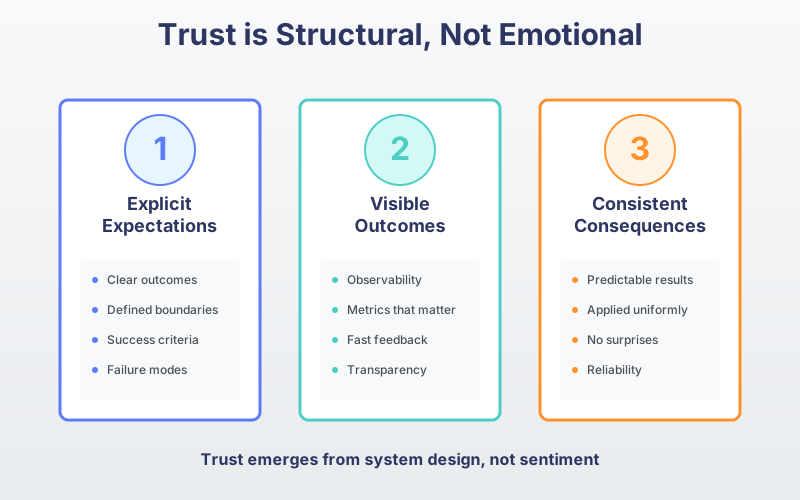
Trust emerges when:
- expectations are explicit
- outcomes are visible
- consequences are consistent
This is why outcome-driven systems outperform instruction-driven ones.
They don’t depend on heroics.
They don’t collapse under load.
They scale predictably.
 —
—
Leadership as systems engineering
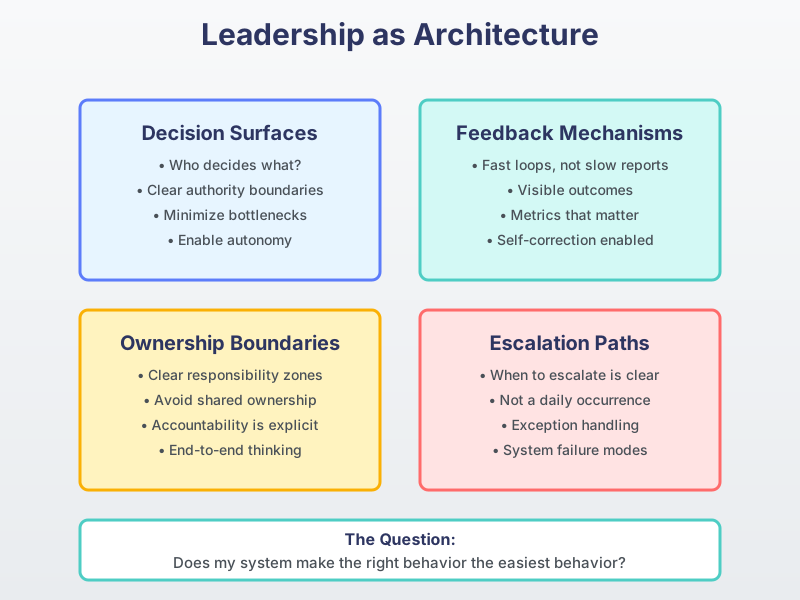
At scale, leadership stops being about motivation and starts being about architecture.
You are no longer managing people.
You are shaping:
- decision surfaces
- feedback mechanisms
- ownership boundaries
- escalation paths
The question is not:
“Are my people doing what I asked?”
The better question is:
“Does my system make the right behavior the easiest behavior?”
If the answer is no, control will never save you.
Closing thought
If your teams require constant supervision to perform,
the issue is not capability — it’s design.
Strong systems don’t need to be watched.
They need to be well-designed.
In the next post, I’ll explore why hiring and role design are architectural decisions — not aspirational ones.
People as a System (PaaS): A Systems Thinking Approach to Leadership
People as a System (PaaS) #3: Designing for Accountability
Share this post