360 Degree Retrospections
In organizations that genuinely improve, feedback isn’t episodic—it’s institutionalized.
During my early years working with teams at Aconex, CoStrategix, Jobsite, and others practicing Scrum and XP, I was introduced, guided, and mentored into a deceptively simple but deeply powerful practice by Craig Brown, VP of Collaboration at Aconex: 360-degree retrospectives involving product stakeholders.
Unlike traditional retrospectives that focus on process and delivery, this approach surfaces interpersonal impact, cultivates reflection, and strengthens trust.
How a 360-Degree Retrospective Works
The structure is intentionally simple:
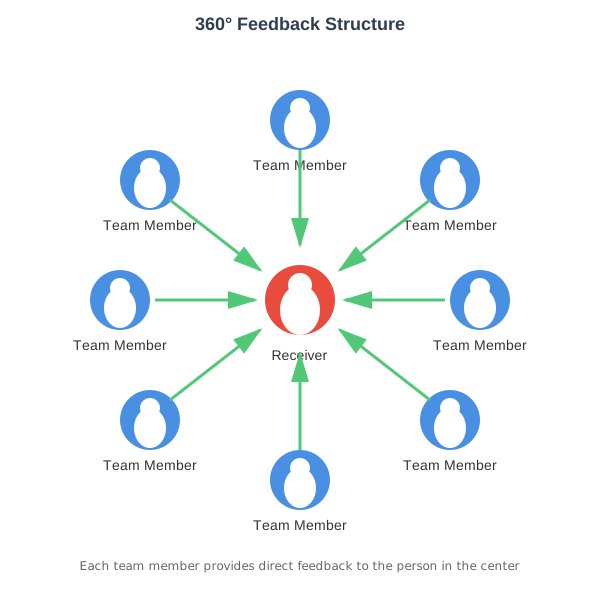
- Gather all team members in one room.
- Ask everyone to write down what they appreciate and what they find challenging about every other participant.
- One person moves to the center.
- Others share feedback directly with them.
- Use a consistent format (good-first or improvement-first).
- Repeat for everyone.
At first, this feels uncomfortable—especially for highly responsive personalities. But discomfort is often the signal that learning is happening.
Why It Works
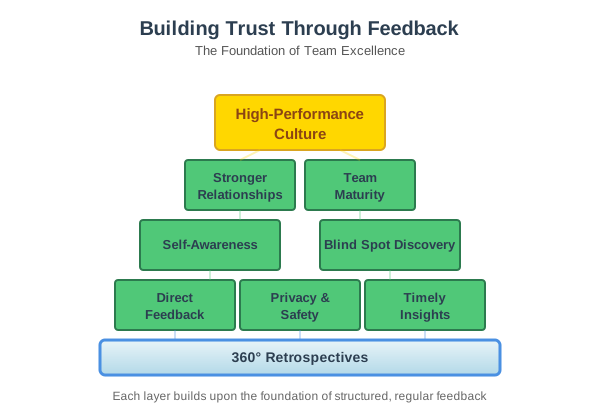
360 retrospectives diagnose issues early, surface blind spots, and accelerate self-awareness. Instead of waiting for annual performance reviews that reduce growth to a number, individuals gain timely, actionable insight into how they are perceived.
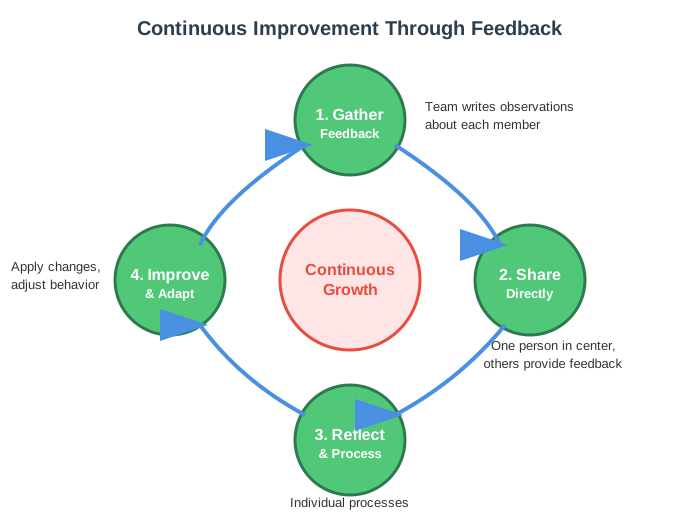
A subtle but powerful benefit is privacy. Feedback is directed to the individual—not broadcast to managers or HR—allowing people to own, address, and improve their gaps without fear or judgment.
A Hidden Superpower for New Leaders
Hiring a manager into an existing team is notoriously difficult. With 360 retrospectives in place, newcomers can integrate faster, understand team culture, and course-correct early—transforming a high-risk transition into a manageable one.
Final Reflection
Agile practices are most effective when they shift teams from reactive to reflective. 360-degree retrospectives are one of the most effective, humane, and scalable ways I’ve seen to do that.
They don’t just improve delivery—they strengthen relationships, reinforce trust, and elevate teams.
If you’re serious about continuous improvement, this is a practice worth institutionalizing.
The Strategic Blueprint: A Leader’s Guide to Design Patterns
Building Highly Available Systems: Beyond Uptime Percentages
Share this post